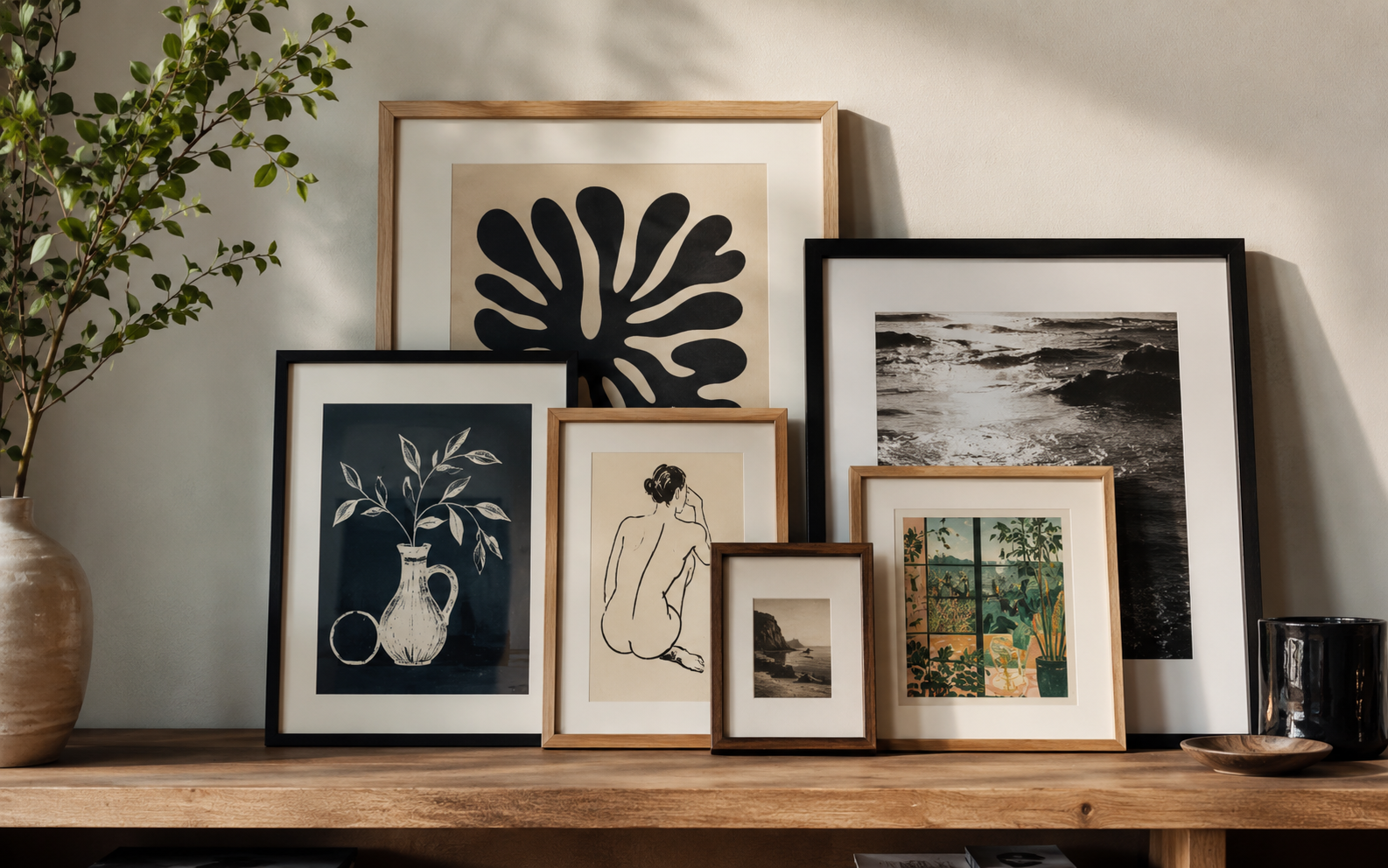
Art collecting sounds like something reserved for the wealthy — a world of auction houses, insurance appraisals, and climate-controlled storage vaults. But there is a parallel collecting world that operates at an entirely different scale, one that is accessible to anyone with a modest budget and a willingness to look beyond the established gallery system. That world is art prints, and it might be the best entry point into collecting that exists.
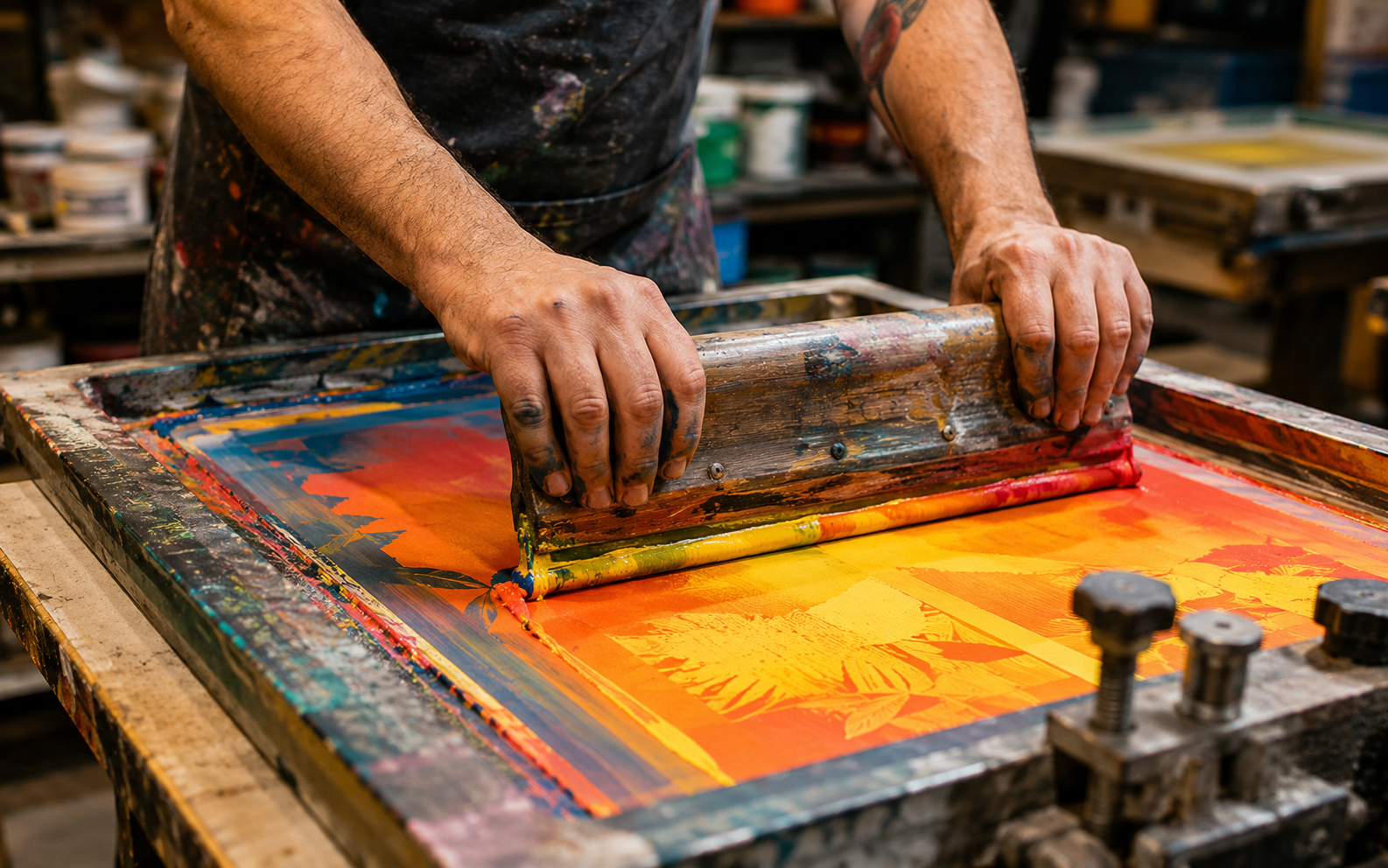
An art print, in the broadest sense, is any work created through a printmaking process — screen printing, lithography, etching, woodcut, risograph, or digital giclée printing. What distinguishes a print from a poster or reproduction is intentionality: the artist conceived the work specifically for the print medium, and each copy in the edition is considered an original artwork, not a copy of something else.
Understanding Editions
The language of print collecting can be intimidating at first, but the core concepts are straightforward. Most prints are produced in numbered editions — a set number of identical (or nearly identical) copies. You will see this expressed as a fraction in pencil at the bottom of the print: 15/50, for example, means this is the fifteenth print in an edition of fifty. The Tate's art glossary offers a comprehensive breakdown of printmaking terminology for anyone looking to learn the full vocabulary.
Edition size matters for both aesthetic and economic reasons. Smaller editions (under 50) tend to be more valuable, both because scarcity drives demand and because smaller runs are often produced with greater care. An artist pulling a screen print edition of 20 can devote more attention to each individual print than one running an edition of 500.
Where to Find Prints
One of the great advantages of print collecting is the diversity of places you can acquire work. Art fairs and print festivals are excellent starting points — they allow you to see work in person, talk directly to artists, and compare a wide range of styles and price points in a single visit. Many cities host annual print fairs that draw dozens or even hundreds of exhibitors.
Online platforms have also expanded access to art prints enormously. Artist websites, print-focused marketplaces, and social media have made it possible to discover and purchase work from artists around the world without leaving your house. The risk of buying online is that you cannot assess print quality in person, but reputable sellers will provide detailed photographs and accurate descriptions of paper stock, ink type, and condition.
What to Look For
The single most important piece of advice for new collectors is deceptively simple: buy what you love. This sounds obvious, but it is remarkably easy to get distracted by questions of investment potential, artist reputation, and resale value. These considerations have their place, but they should never override your genuine response to a piece of work. A collection built on personal taste will always be more satisfying than one built on speculation.
Beyond personal response, there are practical considerations worth noting. Look for prints that are signed and numbered by the artist, as this confirms authenticity and edition size. Pay attention to paper quality — archival papers will hold up for decades, while cheaper stocks may yellow or degrade. And consider framing: a good frame with UV-protective glass will preserve your prints far better than a thumbtack and a bare wall.
Start Small, Stay Curious
The best art print collections are not assembled overnight. They grow organically over years, reflecting the collector's evolving taste and deepening knowledge of printmaking techniques and contemporary artists. Start with a single print that genuinely moves you. Learn about the process used to make it. Seek out more work by the same artist, and by other artists working in similar or contrasting styles. Before long, you will have the beginnings of a collection that tells a story about who you are and what you value in visual art.